
From Thai Dumpsites & Burning Fields to Clean Energy
Tackling Thailand’s 27–28 million tonnes of yearly municipal waste, plastic pollution, and the crop burning behind PM2.5 smog by converting carbon-containing waste into valuable GreenSynGas™, electricity, and mineral fertilizer through modular, net carbon-neutral technology.
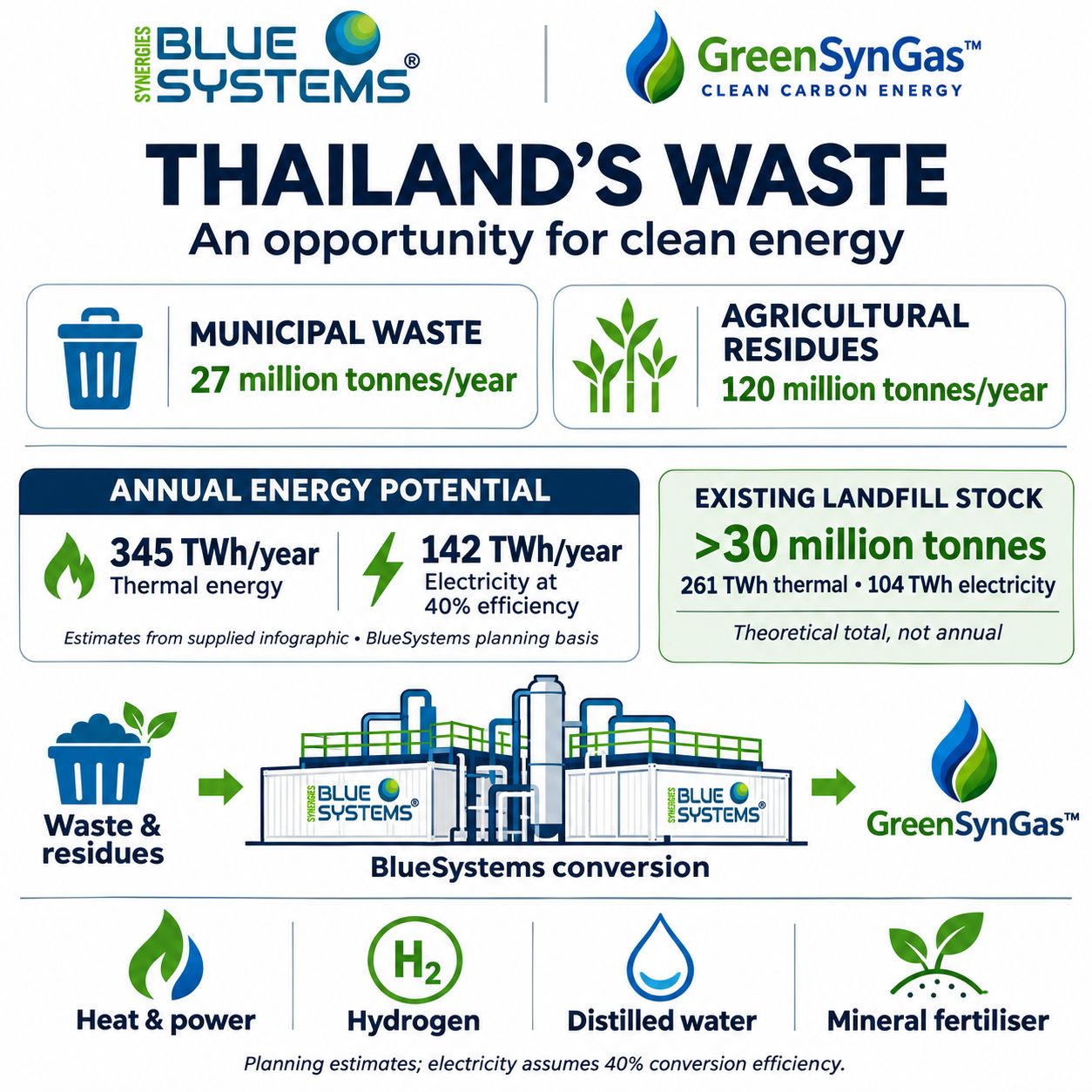
The Urgency
Thailand's Waste & Agricultural Challenges
Thailand generates nearly 27–28 million tonnes of municipal solid waste every year, plus massive agricultural residues. Despite progress in bioenergy, both sectors face deep structural challenges.
Municipal Solid Waste (MSW) Issues
- • Open Dumps & Mismanagement: Around 2,500 open-air dumpsites, with only ~20%–25% managed as proper sanitary landfills. Millions of tonnes sit unmonitored or are open-burned.
- • Low Recycling Rates: Source separation is rare. In Bangkok only ~16% of daily waste is recycled, and unsegregated waste makes incineration or mechanical recycling difficult.
- • Plastic Pollution: Among the world’s heaviest per-capita users of single-use plastic bags, driving severe river and marine plastic contamination.
- • Illegal Hazardous Waste Dumping: Unregulated or corrupt actors mix industrial, electronic, and hazardous wastes into municipal landfills or illegal open dumps.
- • Local Government Constraints: Municipalities often lack budgets, collection vehicles, staff, and technical infrastructure to keep up with rapid urbanization.
Municipal & Agricultural Waste Issues
- • Open Burning & PM2.5 Smog: Post-harvest burning of rice straw, sugarcane leaves, and corn stalks is a primary driver of severe seasonal PM2.5 crises in the North and Central regions.
- • Fragmented Biomass Collection: Palm oil and sugar mills capture their waste, but smallholder farmers lack the machinery, transport, and incentives to collect field residues instead of burning them.
- • Organic & Methane Emissions: Decomposing agricultural and rural organic runoff adds heavily to greenhouse gas emissions and local water pollution when not digested or composted.
Solution & Process
From Waste to Green Fuel & Value Commodities
Patented, innovative modular technology transforming Thai municipal waste, plastics, and agricultural biomass into a valuable circular resource.
Feedstock
Comprehensive Input
Plastics, agricultural residues (rice straw, sugarcane leaves, corn stalks), municipal solid waste, and industrial biomass — anything carbonaceous.
Prep
Separation & Shredding
Metals, glass, and inert materials are removed. The remaining organic and plastic fractions are shredded and prepped.
Reforming
Steam Reforming
Hydrocarbons react with steam at 700–1000°C using flameless burners, producing clean syngas without toxic emissions.
Products
GreenSynGas™ & Fertilizer
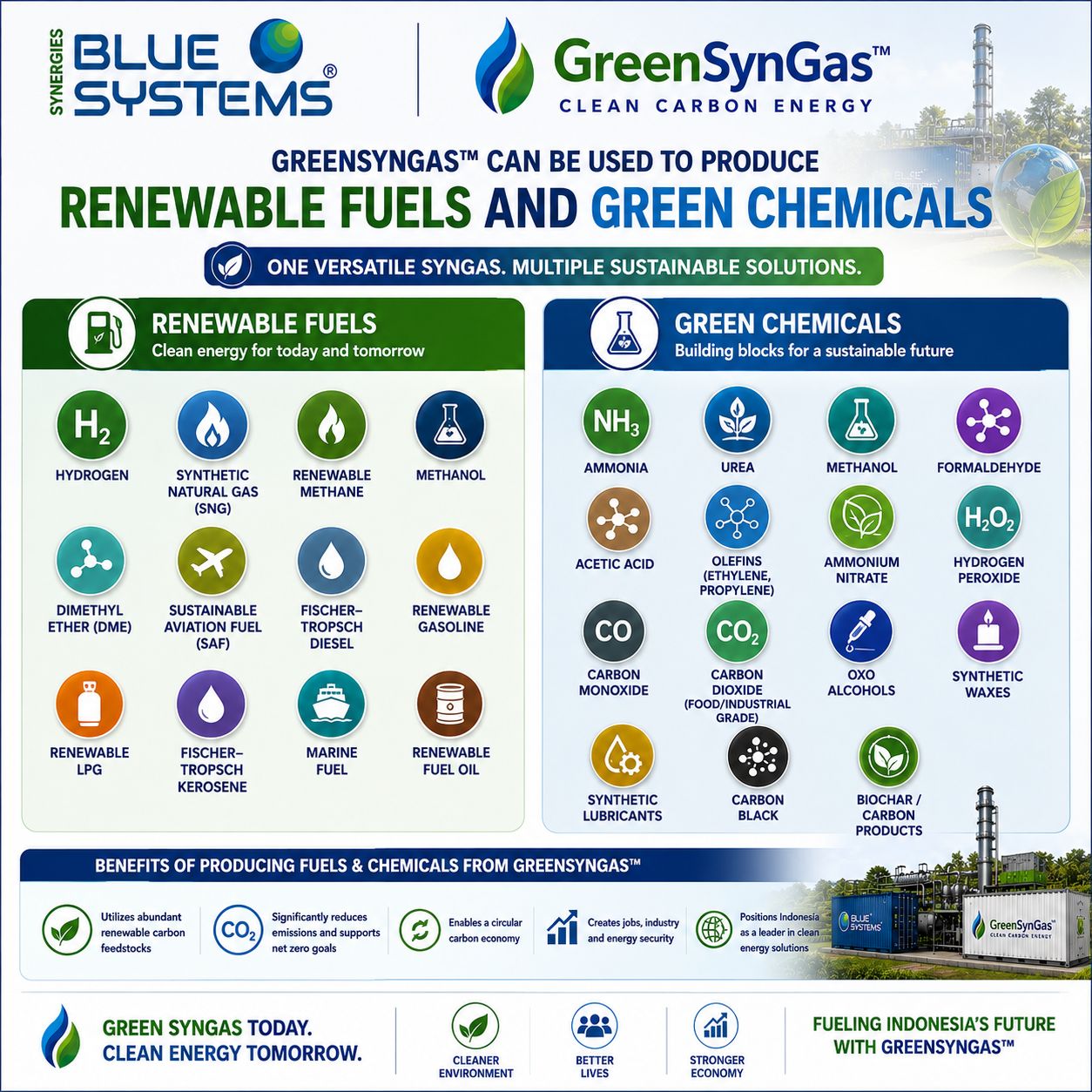
Outputs GreenSynGas™, hydrogen, mineral fertilizer, and distilled water. Part of the output self-sustains the reformer unit.
Municipal & Agricultural Waste
Process Flow Calculator
Potential GreenSynGas™ Value
US$4,000
Estimated CO₂ Prevented
18.5 Tonnes
Illustrative estimates based on US$400 per processed tonne of dry agricultural waste and 1.85 tonnes of avoided CO₂ per tonne. Actual yields, energy value, and emissions reductions depend on feedstock and project conditions; these are not guaranteed returns.
BlueSystems® Configurations
Engineered for Any Scale
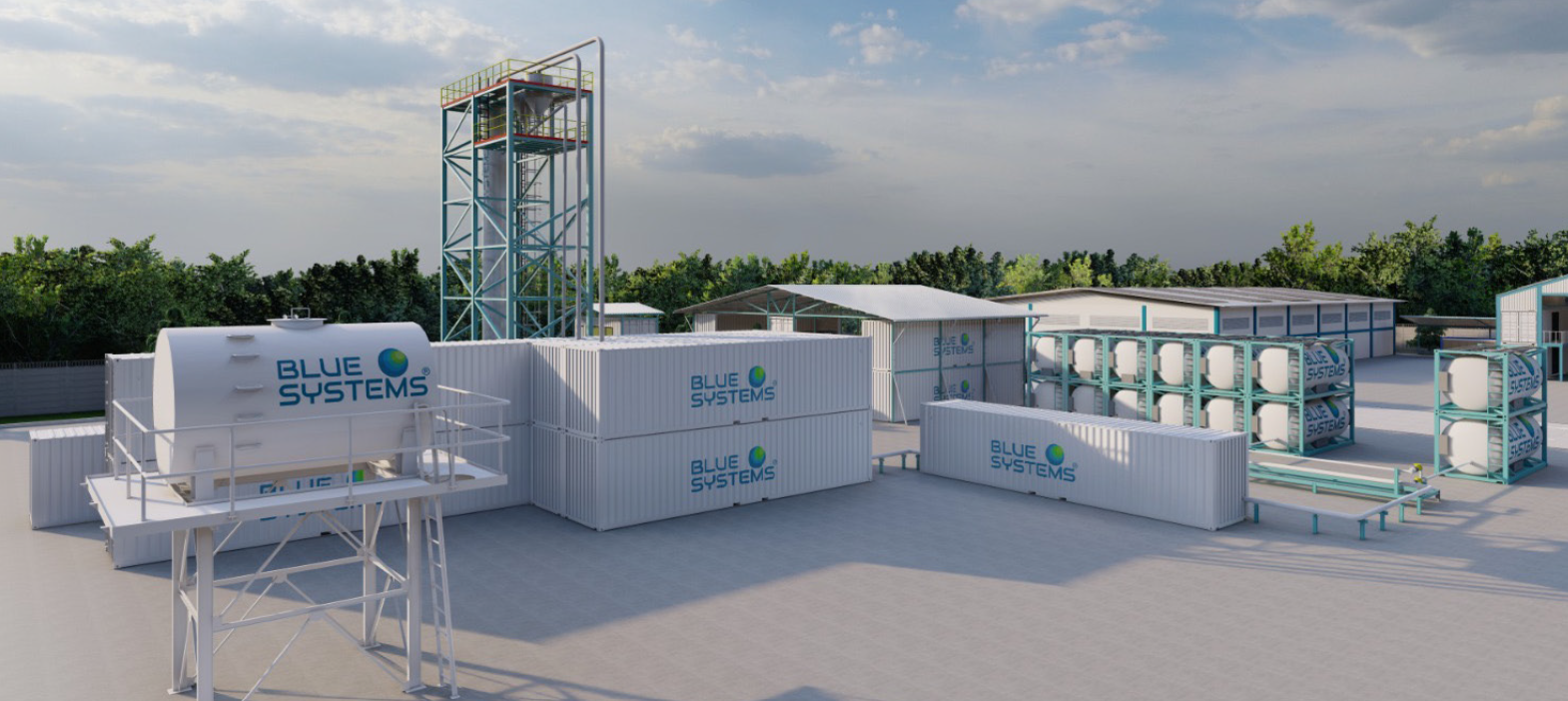
BlueSystems 50 Tonne Per Day Modules
• Space Requirement: A 50-tonne per day processing plant requires approximately 1 acre (roughly the size of a football pitch).
• Gas Offtake & Blending: The GreenSynGas™ we produce can be injected into conventional gas pipelines, blended at 10–15% with natural gas, and utilized within existing infrastructure for power generation.
• Plant Location: While proximity to either the waste feedstock source or the power user is advantageous, it is not strictly essential.
• Energy Conversion Support: If your project requires assistance with energy conversion, we can fully support you with that as well.
BlueSystems® Advantages
Built for Performance, Flexibility & Impact
Intelligent Operating System
Containerized control room with remote monitoring and internet-enabled diagnostics.
Faster Deployment
Prefabricated modular units ensure rapid on-site assembly and shorter project timelines — from start to finish in 12 months.
Zero-Flame, Low Emission
Advanced flameless burners eliminate toxic incineration emissions and landfill methane.
Eliminates Open Burning
Stops rice straw, sugarcane and corn residue burning, cutting the PM2.5 smog in the North and Central regions.
Local Value Creation
Turns waste disposal costs into revenue streams via green energy, distilled water, and mineral fertilizer.
Certified Quality Standards
Engineered to strict ISO standards with independent third-party inspection (DNV/TÜV).
Get in Touch
Ready to Transform Thailand's Waste Challenge?
Partner with us to deploy modular waste-to-energy and hydrogen solutions across municipalities, industrial zones, and agricultural cooperatives in Thailand.